Introduction
When considering the UDL concept of action and expression, we want students actively engaged with the content. One of the ways of doing this is to have the students participating in creating the content in various means. One important part of building a program is ensuring that all courses build on one another. One important way of ensuring students transfer learning is the idea that students should learn key vocabulary of a discipline for transfer of learning in a discipline to occur. It has been suggested that if students learn vocabulary in lower level classes (100-200) they will be able to transfer and apply that knowledge as they progress through their degree coursework. In the following example, we have students use multiple means of expression in creating a glossary of key concepts. This also supports the idea of active learning.
Example: Glossary
In the 100-level Cultural Geography course, we ask students to work together to build a glossary of key geography terms. They do this first in a discussion forum type. Each student selects two geography words from a list of key terms. They are asked to:
- Define the key term in their own words. They can choose to do this by text or podcast.
- Create and example. This can be an image, video, or any other means of example.
- Then they post that information to:
- Discussion post (no reply required.)
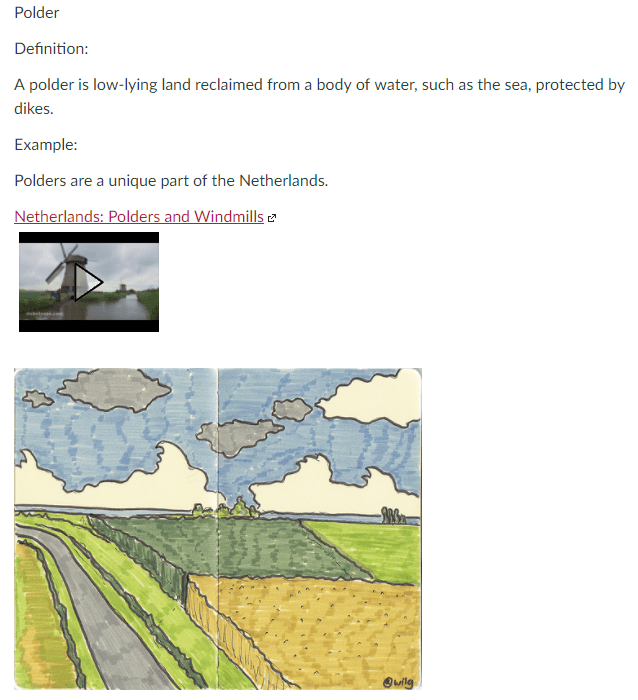
- Add it to a Google Presentation. This allows the student to download the presentation at the end of the course to have access to the glossary after the class is over.

- Discussion post (no reply required.)
Pace, T. (2016). Writing across Contexts: Transfer, Composition, and Sites of Writing/Assignments across the Curriculum: A National Study of Writing. Composition Studies, 44(2), 203-210.
 Mary Burkart Portfolio