Infographics can enhance the learning experience by keying in on the needs of the visual learner.
By presenting content in several modalities, students may be able to better take on new concepts. Creating infographics is a time-consuming process that can be made easier with the help of several infographic maker tools.
This page show four examples of infographics created using four different infographic tools. This section also includes a brief review of each infographic maker product aside from Adobe Illustrator that requires some sort of subcription.
- Adobe Illustrator Example – Adobe Illustraro allows you to create any size or type of graphic illustration from scratch. I created this one after getting design ideas from the three infographic programs below. I did not attempt to locate Illustrator templates for infographics.
- Venngage Example – this tool offers a free infographic maker, however you can only link to the infographics you create, not print them unless you subscribe. Check out the Venngage templates.
- Easel.ly Examples – I prefer this for its low cost and ease of use. A premium membership only costs $37 per year. Check out the Easel.ly templates.
- Visme Example – this tool allows you to create three projects for free. Then you must pay a $12 per month subscription. When you download an infographic for free, it will display the Visme logo throughout the infographic. Check out the Visme templates. Visme also includes templates for presentations, charts/reports, and social graphics.
- HTML Example – this example infographic was designed to ensure screen reader capability and to preserve ADA compliance.
Generally, each of these tools has a similar interface and consequently, require about the same time to learn to use. Each of the tools comes with thousands of graphics and component parts to build your projects.
Adobe Illustrator Example
This infographic was created without benefit of a template. All graphic elements were created using PowerPoint and Illustrator. The gear art was used from Creative Commons and adapted using Paint and PowerPoint.

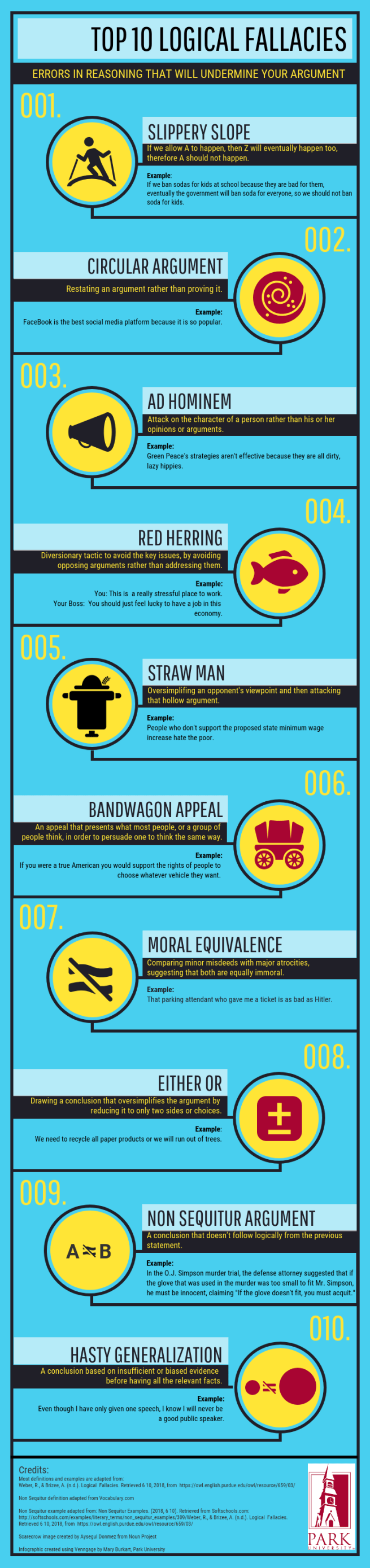
Venngage Example
This infographic was created to support content introduced in unit textbook readings and assessed in the unit, but not reinforced.
Easel.ly Examples
This infographic was created to support content covered in an open resource textbook. This is designed to cull some data for quick at-a-glance access.

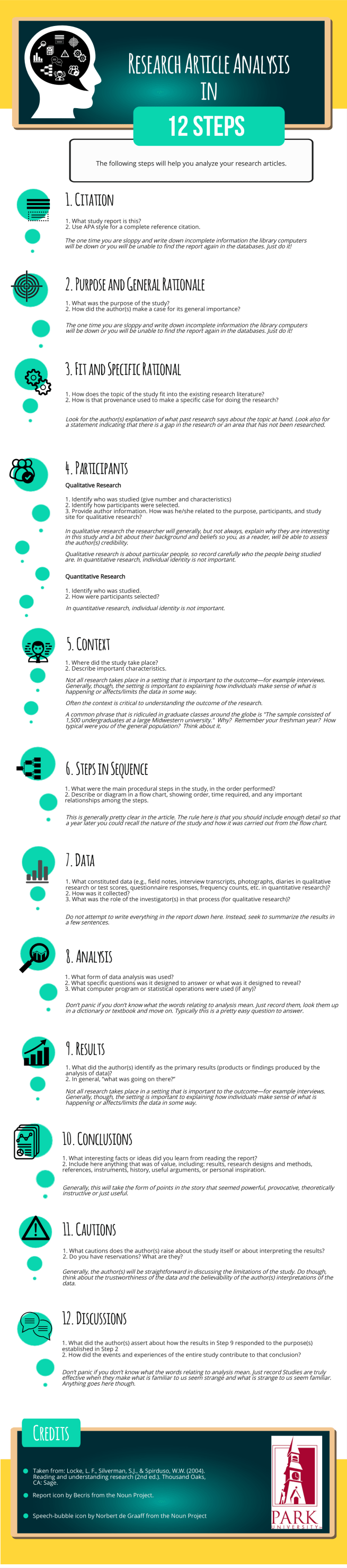
This example was designed to graphically display content for early assignments in a graduate course. The instructor originally submitted this as a text document designed to give guidance for review of research articles. Using an infographic helps to draw attention to the content.
Visme Example
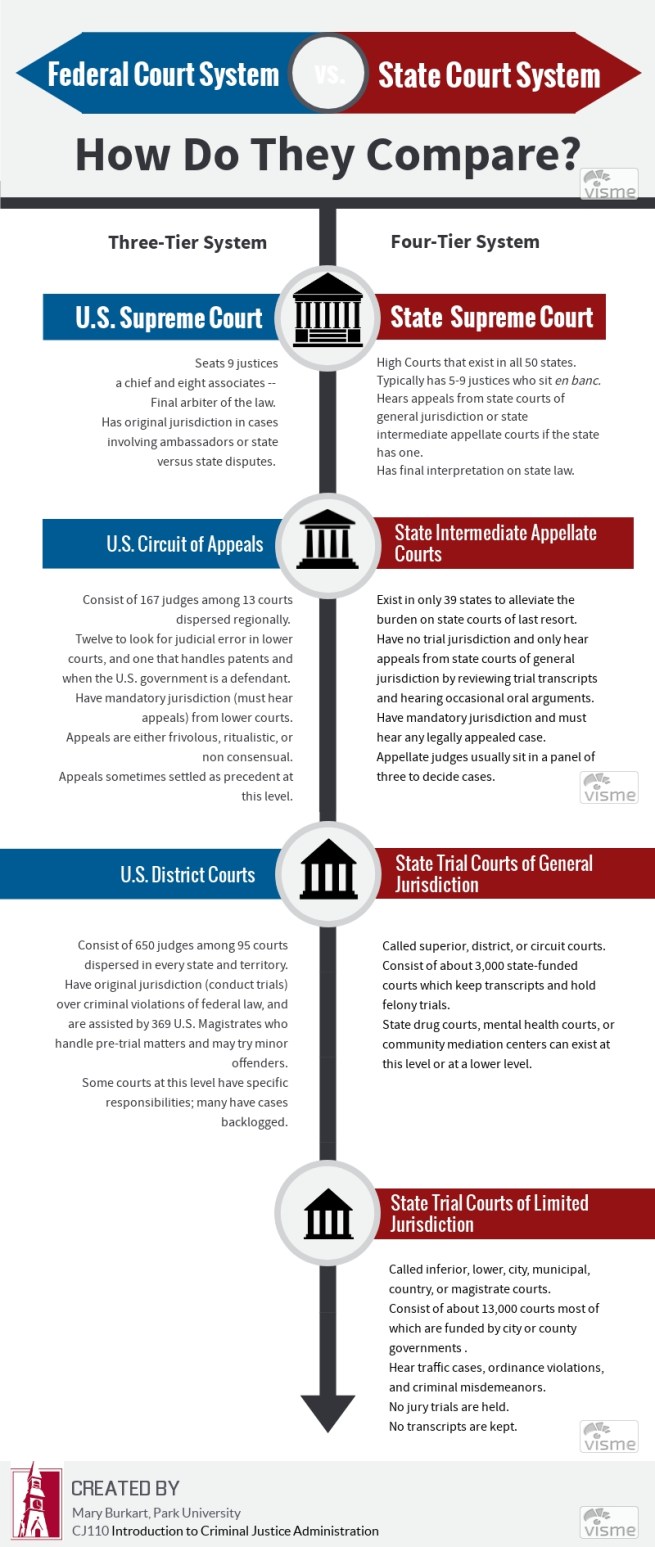
This infographic was created to visually support the comparison of the federal and state court system at a glance.
Originally the content was submitted as a table of information. To compare, see the table below the infographic for the original presentation of the content. For this infographic, an attempt was made to scale back the text.
Original Table of Contents
THE DUAL COURT SYSTEM – FEDERAL (THREE-TIER) AND STATE (FOUR-TIER) SYSTEMS U.S. Supreme Court: seats 9 justices, a chief and eight associates; has original jurisdiction in cases involving ambassadors or state versus state disputes; hears other cases when 4 agree to issue a writ of certiorari (pronounced sur-shee-uh-rah-ree) to review a lower court case, and different sides file briefs and attorneys make oral arguments; a vote of 5:4 or higher, with concurring opinions and/or dissents may be a landmark decision if it ends controversy and settles Constitutional interpretation. State Courts of Last Resort: also called State Supreme Courts or High Courts that exist in all 50 states and typically have 5-9 justices who sit en banc (all together) and hear appeals from state courts of general jurisdiction or state intermediate appellate courts if the state has one; they have final interpretation on state law, and although technically, someone could appeal from this level to the U.S. Supreme Court, it rarely happens because few cases involve the Constitution or federal law. U.S. Circuit of Appeals: consist of 167 judges among 13 courts, dispersed regionally, twelve to look for judicial error in lower courts, and one that handles patents and when the U.S. government is a defendant; they have mandatory jurisdiction (must hear appeals) from lower courts, and appeals are either frivolous, ritualistic, or nonconsensual, with nonconsensual appeals sometimes settled as precedent at this level. State Intermediate Appellate Courts: exist in only 39 states to alleviate the burden on state courts of last resort; they have no trial jurisdiction and only hear appeals from state courts of general jurisdiction by reviewing trial transcripts and hearing occasional oral arguments; they have mandatory jurisdiction and must hear any legally appealed case; appellate judges usually sit in a panel of three to decide cases. U.S. District Courts: consist of 650 judges among 95 courts dispersed in every state and territory; they have original jurisdiction (conduct trials) over criminal violations of federal law, and are assisted by 369 U.S. Magistrates who handle pre-trial matters and may try minor offenders; some courts at this level have specific responsibilities; many have cases backlogged. State Trial Courts of General Jurisdiction: variously called superior, district, or circuit courts, they consist of about 3,000 state-funded courts which keep transcripts and hold felony trials; when states create specialized courts, such as drug courts, mental health courts, or community mediation centers, they can exist at this level or at a lower level. State Trial Courts of Limited Jurisdiction: variously called inferior, lower, city, municipal, country, or magistrate courts, they consist of about 13,000 courts most of which are funded by city or county governments (which sometimes mistakenly call them circuit or district courts), hearing traffic cases, ordinance violations, and criminal misdemeanors; no jury trials are held, and no transcripts are kept, requiring a trial de novo if an appeal is made.
HTML Example
The following infographic was created in HTML in order to preserve screen reader capability and to preserve ADA compliance. The following image is a graphic representation of the original infographic. Click to visit a page that has the HTML version of the infographic: A Visual Guide to APA Citations
Go to top

 Mary Burkart Portfolio