Introduction
It is important to give students more than one way to experience content. The examples below demonstrate different ways to represent content.
Example: Online Lecture Content
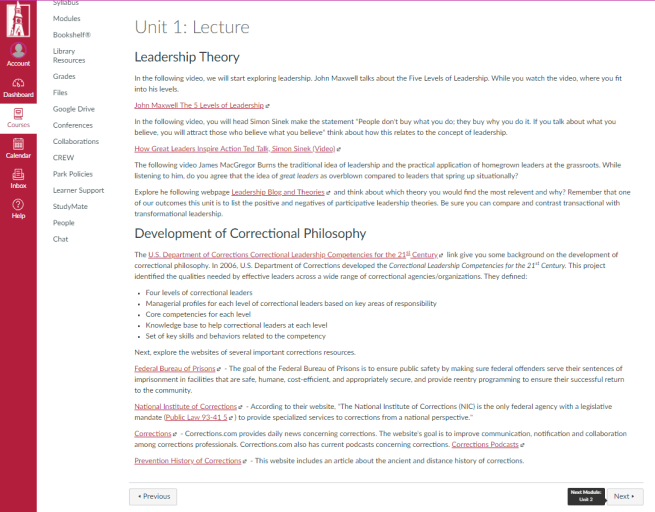
Some instructors like to include a list of readings and/or videos in their online courses. I work with them to turn those lists into an online lecture. Rather than providing students a list of readings and videos, I have them create an annotated lecture format that links those readings and videos to unit concepts to help to students understand how they fit into the content for the unit. This way, the developer can provide the students with some clues as to how they expect students to process the information in relationship to the unit outcomes.
By providing the connection, course developers may also find that the links and videos do or do not have a close relationship to the content and may decide to weed out some and replace them with others.
Some examples of connecting statements might be:
In the following video, you will see….notice that this relates to the concept of…
The following website is an example of ….remember that one of our outcomes this unit is to be able to show examples of …. Can you think of another example like this?
The next three links give you all the state laws pertaining to …please pay extra attention to…
The following video gives us an example of concept 1, concept 2, or concept 3. Can you figure out which concept it pertains to?
Example: Annotated Online Lecture
Example: Concept Map
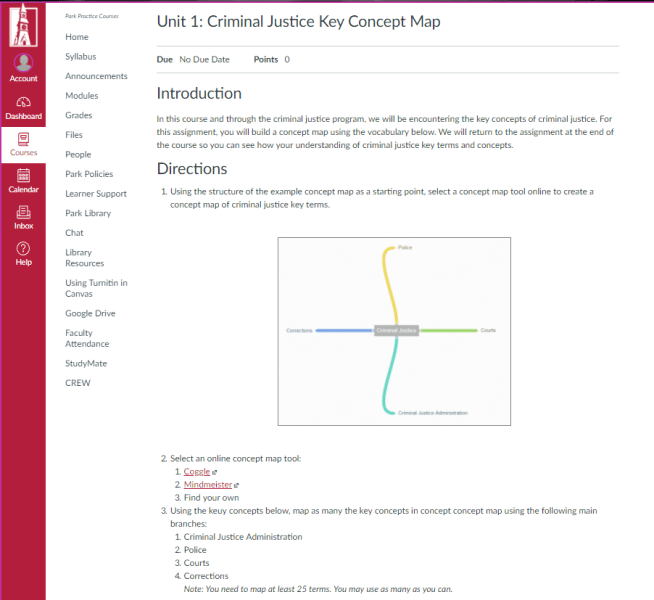
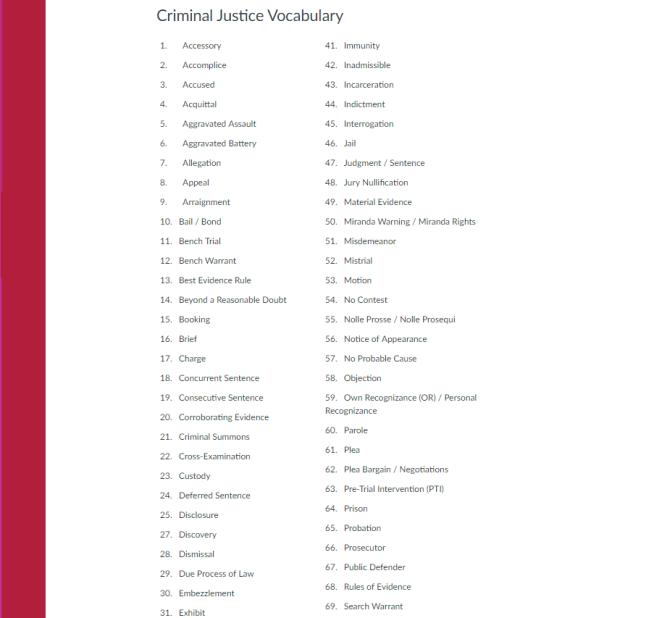
In the Introduction to Criminal Justice course, we ask a student to create a concept map at the beginning of the semester to assess the knowledge they have coming into a course. This gives the instructor a quick window into the knowledge, assumptions, and misconceptions they bring with them to the course as well as help them pitch the course appropriately.
We assign the same concept map activity at the beginning and end of the course. Seeing how the concept maps grow and develop greater nuance and complexity over time helps students (and the instructor) see what they are learning.
Example: CJ Concept Map Assignment
 Mary Burkart Portfolio